

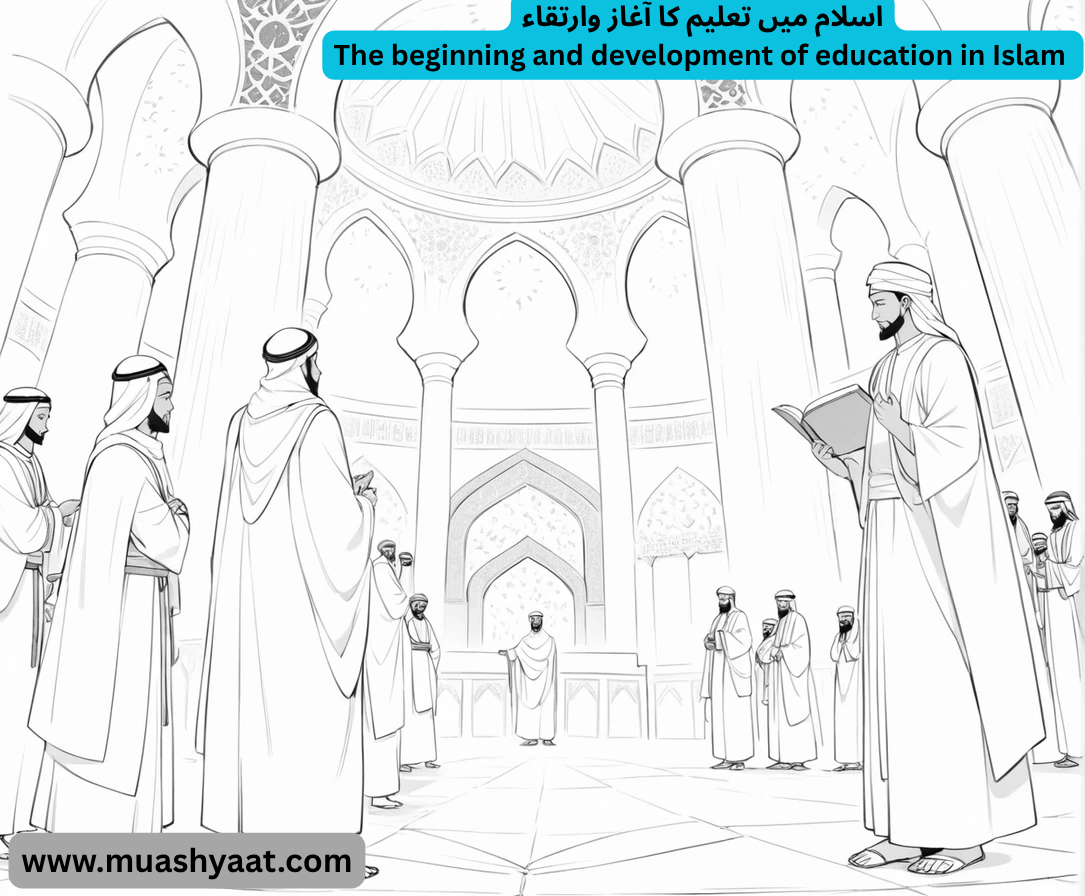
اسلام میں تعلیم کا آغاز وارتقاء ⇐ ہجرت کے بعد مدینہ منورہ میں مسجد نبوی تعمیر ہوئی جو مسلمانوں کا پہلا مدرسہ تھا۔ رسول کریم ﷺ کے معلم اور صحابہ کار شاگرد تھے صحابہ کرام مسجد میں ایک صفحہ یعنی چبوترے پر اکٹھے ہوتے اور خدا کے رسول ﷺ انہیں احکام خداوندی کی تعلیم دیتے۔
The beginning and development of education in Islam After the migration, the Prophet’s Mosque was built in Medina, which was the first school of the Muslims. The Prophet’s (peace be upon him) teachers and his companions were his students. The companions would gather on a platform in the mosque and the Messenger of God (peace be upon him) would teach them the commandments of God.
عہد خلفائے راشدین
فضا ئے راشدین نے علم و ہدایت کے فروغ کو جاری رکھا۔ حضرت عمر فاروق کو تعلیم میں باقاعدگی پیدا کرنے کا اس قدر خیال تھا کہ انھوں نے علماء اور اساتذہ کی تنخواہیں مقر فرمائیں۔ مسجد کو تعلیم میں مرکزی حیثیت حاصل تھی۔ اس لیے اسلامی فتوحات کا دائرہ جوں جوں وسیع ہوتا گیا مفتوحہ علاقوں میں مساجد کی تعمیر میں اضافہ ہوتا گیا۔
Era of the Rightly Guided Caliphs
The era of the Rightly Guided Caliphs continued the promotion of knowledge and guidance. Hazrat Umar Farooq was so concerned about creating regularity in education that he fixed the salaries of scholars and teachers. The mosque had a central position in education. Therefore, as the scope of Islamic conquests expanded, the construction of mosques increased in the conquered areas.
مساجد کی تعداد میں اضافہ
مساجد کی تعداد میں اضافہ تعلیم کی توسیع میں بے حد مدد گار ثابت ہوا۔ مدینہ منورہ میں حضرت علی اور حضرت عبداللہ بن عباس ہفتہ وار درس دیتے تھے اور مسائل کی توجیہہ میں فلسفے، منطق حدیث بلاغت اور فقہ سے استفادہ کرتے تھے۔
Increase in the number of mosques
The increase in the number of mosques proved to be very helpful in the expansion of education. In Medina, Hazrat Ali and Hazrat Abdullah ibn Abbas used to give weekly lectures and used philosophy, logic, hadith, rhetoric and jurisprudence to explain problems.
فروغ علم اور صحابیات
اس دور میں مسلم خواتین بھی عورتوں میں اسلامی تعلیمات کی اشاعت فرماتی تھیں۔
حضرت فاطمہ خواتین کو وعظ فرماتی تھیں۔ حضرت عائشہ حدیث بیان فرماتیں اور فقہی مسائل کی توجیہہ کرتی تھیں۔
حضرت امام حسین علیہ السلام کی صاحبزادی حضرت سکینہ اپنی علمی فضیلت کیلئے مشہور تھیں۔
ان کی رہائش گاہ پر عراہ فقہا علماء اہل صفہ کی مجالس قائم ہوتی تھیں۔
The spread of knowledge and the companions
- During this period, Muslim women also spread Islamic teachings among women.
- Hazrat Fatimah used to preach to women. Hazrat Aisha used to narrate hadiths and explain jurisprudential issues.
- Hazrat Sakina, the daughter of Hazrat Imam Hussain (a.s.), was famous for her academic excellence.
- Meetings of scholars, jurists, and scholars from the people of Suffa used to be held at her residence.
عباسی دور میں علمی ترقی
عباسی دور اسلامی تہذیب و تمدن کا سنہرا دور کہلاتا ہے۔ ہارون الرشید علوم وفنون کا سر پرست اور علماء و فضلاء کا بے حد قدردان تھا۔ اس کا در بارعلماء فضلاء حکماء اور مشاہیر فنون کا مرکز تھا۔ اس نے ان سب کی فیاضانہ قدردانی کی۔ دوسری زبانوں سے عربی میں تراجم کا سلسلہ ہارون الرشید کے دادا خلیفہ منصور نے شروع کیا تھا۔
Scientific Development in the Abbasid Period
The Abbasid period is called the golden age of Islamic civilization. Harun al-Rashid was a patron of sciences and arts and was very appreciative of scholars and nobles. His court was a center of noble scholars, sages and famous artists. He generously appreciated all of them. The process of translations from other languages into Arabic was started by Harun al-Rashid’s grandfather, Caliph Mansur.
علمی کارنامے
اس نے بغداد میں دار الحکمہ قائم کیا اور ایران ہندوستان وغیرہ سے جید علماء جمع کیے جو دیگر زبانوں سے مشہور کتابوں کو عربی میں منتقل کرنے پر مامور تھے۔ اس طرح اقوام عالم کے علمی کارنامے عربوں کے ہاں منتقل ہوئے۔ عربوں نے ان میں اضافے کیے اور تجزئیے تنقید اور تحقیق کے نئے اسلوب وضع کیئے چونکہ اسلامی سلطنت کی حدیں مغرب میں اندلس تک، مشرق میں بنگال تیک اور شمال میں ترکستان تک جنوب میں سواحل بحیرہ عرب اور بحیرہ ہند تک وسیع ہو چکی تھیں۔
Scientific Achievements
He established Dar al-Hikmah in Baghdad and gathered great scholars from Iran, India, etc. who were tasked with translating famous books from other languages into Arabic. In this way, the scientific achievements of the nations of the world were transferred to the Arabs. The Arabs added to them and devised new methods of analysis, criticism and research, since the boundaries of the Islamic empire had expanded to Andalusia in the west, Bengal in the east and Turkestan in the north, and the coasts of the Arabian Sea and the Indian Ocean in the south.
دنیا کا وسیع وعریض خطہ
اس لیے اس وقت تک کی معلوم دنیا کا وسیع وعریض خطہ علم کا گہوارہ بن گیا اور تعلیم کے ایک مثالی نظام میں منسلک ہو گیا۔
اس طرح عالمی تہذیب میں ایک نئی تہذیب کا اضافہ ہوا۔ اس کی خوشہ چینی سے دور حاضر کی مغربی تہذیب پیدا ہوئی۔
The vast expanse of the world
- Thus, the vast expanse of the hitherto known world became a cradle of knowledge and was connected to an ideal system of education.
- Thus, a new civilization was added to world civilization. From its blossoming, modern Western civilization was born.
علمی ترقی آٹھویں تا چودھویں صدی عیسوی میں
آٹھویں تا چودھویں صدی عیسوی تک میں یورپ پر جہالت کی تاریکی چھائی ہوئی تھی۔ مسلمانوں نے اس دور میں علم کی شمعیں فروزاں کیں اور ایک ایسے نظام تعلیم کو فروغ دیا جس کے ذریعے سے انھوں نے اہل یونان اہل ایران دو ہندوستان اور دیگر اقوام کے علوم وفنون کے خزانوں کو مسلمانوں نے ہی علوم و فنون کا ورثہ اور تنقید وتحقیق کے اسلوب اہل یورپ کو عطا کیے۔ ان کے نتیجے میں وہاں احیائے علوم کی تحریک چلی اور موجودہ تہذیب کا آغاز ہوا۔
Scientific Development in the 8th to 14th Centuries AD
From the 8th to the 14th centuries AD, Europe was shrouded in the darkness of ignorance. During this period, Muslims lit the candles of knowledge and developed a system of education through which they shared the treasures of the sciences and arts of the Greeks, the Iranians, the Indians and other nations. Muslims themselves gave the heritage of sciences and arts and the methods of criticism and investigation to the people of Europe. As a result, a movement of revival of sciences started there and the present civilization began.
مدرسہ نظامیہ بغداد
اسلام میں پہلا باقاعدہ مدرسہ حکومت کی سربراہ میں قائم ہوا غالبا نظام الملک نے بغداد میں قائم کیا۔ یہ نظامیہ بغداد کے نام سے مشہور ہوا اور بعد کے کئی مدرسوں یا اعلی درسگاہوں کیلئے مثال ثابت ہوا۔ نظام الملک ایران کے شہنشاہ ملک شاہ سلجوکی کا وزیر اعظمتھا جو اپنی علمی تعلیمی خدمات کیلئے مشہور ہے۔
Madrasa Nizamiya Baghdad
The first formal madrasa in Islam was established under the leadership of the government, probably by Nizam al-Mulk in Baghdad. It became known as Nizamiya Baghdad and served as a model for many later madrasas or higher schools. Nizam al-Mulk was the prime minister of the Seljuk emperor of Iran, Malik Shah, who is famous for his scholarly and educational services.
بغداد کے اخراجات
نظامیہ بغداد کے اخراجات کیلئے خطیر رقوم وقف تھیں جو اساتذہ کی تنخواہوں ، طلبہ کے وظائف ، ان کی رہائش و طعام علاج معالی ں کے اور دیگر لوازمات پر صرف کی جاتی تھیں۔ بعد میں اسلامی سلطنت کے مشرقی ممالک میں ان کا جال بچھ گیا یہاں تک کہ ایک چھوٹے سے مقام پر بھی مدرسہ قائم ہوا اور مدرس مقرر کیا گیا۔
Expenses of Baghdad
There were huge sums of money set aside for the expenses of the Baghdad administration, which were spent on the salaries of teachers, scholarships for students, their accommodation and food, medical treatment of the students and other necessities. Later, their network spread to the eastern countries of the Islamic Empire, and even a madrasa was established in a small place and a madrasa was appointed.
بغداد کے مشہور اساتذہ
نظامی مدارس بغداد کے علاوہ نیشا پور مبلغ ” ہرات مرو اصفهان، بصرہ موصل غرضیکہ سلطنت کے ہر بڑے قصبےاور شہر میں قائم ہوئے۔ ایک وقت میں ان مدارس پر سالانہ 15 لاکھ ڈالرخرچ کیے جاتے تھے۔ نظامیہ بغداد کے مشہور اساتذہ میں ابو اسحاق شیرازی ابو ناصر ابن سباغ امام الغزائی ابن مبارک وغیرہ شامل تھے۔ ابن جبیر جس نے چودھویں صدی کے وسط میں نظا یہ بغداد کو دیکھا” لکھتا ہے “سوق الثلاثہ ( منگل بازار ) کے مرکز میں انتظامیہ ہے جس کی خوبصورتی ضرب المثل بن چکی ہے۔
Famous Teachers of Baghdad
In addition to the Nizamī madrasas in Baghdad, Nishapur, Maqdis, Herat, Marw, Isfahan, Basra, Mosul, and other major towns and cities of the empire were established. At one time, 1.5 million dollars were spent annually on these madrasas. Famous teachers of the Nizamī madrasas in Baghdad included Abu Ishaq Shirazi, Abu Nasir Ibn Sabagh, Imam al-Ghazai, Ibn al-Mubarak, etc. Ibn Jubayr, who saw Nizamī Baghdad in the middle of the fourteenth century, writes, “In the center of the Souq al-Tala’tha (Tuesday Bazaar) is the administration, the beauty of which has become proverbial.”
ہم أمید کرتے ہیں آپ کو “اسلام میں تعلیم کا آغاز وارتقاء” کے بارے میں مکمل آگاہی مل گئی ہوگی۔۔۔
MUASHYAAAT.COM 👈🏻 مزید معلومات کیلئے ہمارے اس لنک پر کلک کریں
ہماری ویب سائٹ پر آنے کیلئےشکریہ